Moroccan Souks and Traditional Markets : A Complete Cultural Guide
Moroccan markets and souks are among the most memorable parts of traveling through Morocco. Filled with spices, handmade crafts, colorful textiles, traditional clothing, leather goods, fresh produce, lamps, pottery, and the sound of everyday conversation, they offer far more than a shopping experience.
For centuries, markets have played an important role in Moroccan life. They are places where people buy food and household goods, where artisans sell the results of their work, where farmers bring local produce, and where communities gather.
For travelers, exploring a Moroccan souk is an opportunity to experience the country’s culture through its food, craftsmanship, traditions, and everyday life.
From the famous maze-like souks of Marrakech and Fes to weekly rural markets in the Atlas Mountains and smaller neighborhood markets across the country, every market has its own personality.
This guide explains what Moroccan markets and souks are, what you can buy, how bargaining works, and how to enjoy the experience respectfully.
What Is a Souk in Morocco?
A souk is a traditional marketplace. Depending on its location, it may consist of a permanent network of shops and stalls or a market held on specific days of the week.
In Morocco, souks are an important part of both historic and modern life.
Different Types of Moroccan Markets
| Type of Market | What You Can Expect |
|---|---|
| Medina souk | Permanent shops selling crafts, clothing, spices, and souvenirs |
| Neighborhood market | Everyday food, household goods, and local products |
| Weekly rural souk | Farmers, livestock traders, food sellers, and local merchants |
| Craft souk | Products made by specialist artisans |
| Food market | Fresh fruit, vegetables, meat, fish, olives, and spices |
| Tourist-focused souk | Crafts and products commonly purchased by international visitors |
Some markets are designed primarily around everyday local shopping, while others have become major attractions for visitors.
The best experience often comes from understanding that both can exist side by side.
Why Are Souks Important to Moroccan Culture?
Moroccan markets are more than commercial spaces.
Traditionally, they have also been places for:
- Social interaction
- Community gatherings
- Trade
- Meeting friends and neighbors
- Sharing local news
- Supporting artisans
- Selling agricultural products
- Preserving traditional crafts
In rural areas, the weekly market can be particularly important.
People may travel from nearby villages to buy supplies, sell produce, meet relatives, or conduct business.
This means that visiting a local souk can offer a glimpse into everyday Moroccan life.
The Experience of Walking Through a Moroccan Souk
Walking through a Moroccan souk is often an experience for all the senses.
You may smell spices, leather, cedarwood, fresh mint, grilled food, and perfume. You may hear merchants speaking with customers, craftsmen working with their hands, people moving through narrow streets, and the general energy of a busy marketplace.
Every corner can reveal something different.
One moment you may be surrounded by handmade lamps, and the next you may find a stall filled with olives, spices, pottery, or traditional clothing.
The atmosphere can feel overwhelming during a first visit, especially in Morocco’s largest historic medinas.
The best approach is usually to slow down.
There is no need to buy something from every shop or see every street.
What Can You Buy in Moroccan Souks?
Morocco is famous for its traditional craftsmanship, and souks are among the best places to discover it.
Popular Things to Find in Moroccan Markets
| Product | What Makes It Special |
|---|---|
| Spices | Colorful blends used in Moroccan cooking |
| Moroccan rugs | Handmade textiles with regional designs |
| Leather goods | Bags, slippers, belts, and accessories |
| Pottery | Handmade bowls, plates, and decorative items |
| Zellige-inspired products | Geometric Moroccan designs |
| Lanterns | Metalwork creating decorative light patterns |
| Argan oil | Traditional product associated with southwestern Morocco |
| Traditional clothing | Djellabas, kaftans, scarves, and accessories |
| Woodwork | Carved and handcrafted decorative products |
| Ceramics | Regional styles and handmade designs |
| Olives | Available in many varieties |
| Mint and herbs | Everyday ingredients in Moroccan kitchens |
The quality of products can vary significantly, so travelers should take their time before making a major purchase.
Moroccan Spices: A Feast for the Senses
Spice stalls are among the most recognizable parts of Moroccan markets.
Large containers may display colorful ingredients ranging from cumin and paprika to turmeric, ginger, cinnamon, and dried herbs.
Common Moroccan Spices
| Spice | Common Use |
|---|---|
| Cumin | Meat, vegetables, salads, and tagines |
| Paprika | Marinades and savory dishes |
| Turmeric | Color and flavor |
| Ginger | Tagines and spice mixtures |
| Cinnamon | Sweet and savory dishes |
| Saffron | Premium Moroccan cuisine |
| Ras el hanout | Complex traditional spice blend |
| Black pepper | Everyday seasoning |
| Dried herbs | Cooking and tea preparations |
When purchasing spices, ask questions about freshness and how the product is used.
This can turn a simple purchase into a cultural conversation.
Moroccan Carpets and Rugs
Moroccan carpets are internationally famous, particularly those connected with Amazigh weaving traditions.
Different regions are associated with different styles, colors, materials, and patterns.
A handmade rug can represent hours, weeks, or even months of work.
Before purchasing one, ask about:
- Where it was made
- Who made it
- What materials were used
- Whether it is handmade
- How it should be cleaned
- Whether shipping is available
- The final price
Don’t feel pressured to make an immediate decision.
A good purchase is one you have had time to consider.
Leather Goods in Moroccan Souks
Leather is another traditional craft found throughout Morocco.
You may see:
- Bags
- Slippers
- Jackets
- Belts
- Wallets
- Poufs
- Travel accessories
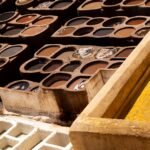
Fes is particularly famous for its historic leather-working tradition.
However, as with all handmade products, quality can vary.
Check the stitching, material, smell, finishing, and durability before buying.
Pottery, Ceramics and Handmade Crafts
Moroccan markets are excellent places to discover traditional decorative arts.
Handmade products may include:
- Tagine pots
- Serving plates
- Decorative bowls
- Ceramic cups
- Mosaic-style tables
- Painted pottery
- Handcrafted ornaments
Some regions have their own distinctive artistic traditions.
If you are interested in a particular product, ask where it was made.
Buying directly from artisans or reputable workshops can also give you a better understanding of the work behind the finished piece.
Marrakech Souks: Morocco’s Most Famous Marketplace Experience
The souks of Marrakech are among the most visited markets in Morocco.
Located around the historic medina and near the famous Jemaa el-Fna area, they form an extensive network of narrow lanes and shops.
Different sections may specialize in particular products.
You can find:
- Leather goods
- Rugs
- Lamps
- Clothing
- Spices
- Jewelry
- Pottery
- Woodwork
- Souvenirs
The atmosphere is busy and energetic.
For first-time visitors, getting lost is almost part of the experience.
However, keep your phone charged, know the location of your accommodation, and consider using an offline map.
The Souks of Fes
Fes offers a different type of market experience.
The historic medina contains an extraordinary network of narrow streets and traditional workshops.
Here, travelers can discover crafts connected to centuries-old traditions.
The souks of Fes are particularly interesting for visitors who want to explore:
- Traditional leatherwork
- Pottery
- Metalwork
- Textiles
- Religious and historic crafts
- Food products
Walking through Fes often feels like traveling through different layers of Moroccan history.
Markets in Smaller Moroccan Cities and Towns
Some of the most interesting markets are not necessarily the most famous.
Smaller towns and villages may have weekly markets where tourism plays a much smaller role.
Here, you may see people buying everyday necessities rather than souvenirs.
Depending on the region, you may find:
- Fresh vegetables
- Seasonal fruit
- Livestock
- Clothing
- Household products
- Farming supplies
- Bread
- Local cheese
- Olives
- Herbs and spices
These markets can offer a more direct view of everyday economic and community life.
Travel respectfully and remember that people are there to conduct their normal daily business.
How Does Bargaining Work in Morocco?
Bargaining is common in many Moroccan markets, particularly when purchasing souvenirs, crafts, rugs, and certain non-fixed-price products.
However, it is not appropriate everywhere.
Supermarkets, pharmacies, many restaurants, and businesses with clearly marked prices generally operate differently.
A Simple Guide to Bargaining
| Step | What to Do |
|---|---|
| 1 | Ask for the price |
| 2 | Decide what you are genuinely willing to pay |
| 3 | Make a polite counteroffer |
| 4 | Negotiate calmly |
| 5 | Don’t agree to a price you do not intend to pay |
| 6 | Be prepared to walk away respectfully |
| 7 | Accept the final agreement graciously |
Bargaining should be enjoyable, not confrontational.
A smile, patience, and a sense of humor can make the experience much more pleasant.
Important Rule: Don’t Bargain If You Don’t Intend to Buy
One of the most respectful things travelers can do is avoid negotiating intensely over a product they have no intention of purchasing.
If you reach an agreement on a price, it is generally better to honor that agreement.
If you’re simply browsing, you can politely say so.
Useful phrases include:
- La, shukran — No, thank you.
- Bshhal? — How much?
- Shukran — Thank you.
Even learning a few words can make everyday interactions easier.
How to Avoid Feeling Pressured
Popular tourist areas can sometimes be intense.
Merchants may invite you into their shop or encourage you to look at their products.
You are never required to buy something simply because someone showed it to you.
Be polite but clear.
You can:
- Say thank you and continue walking
- Ask the price only if genuinely interested
- Take time to compare products
- Avoid revealing that you feel rushed
- Walk away if the interaction becomes uncomfortable
Shopping should be enjoyable.
How to Tell if a Product Is Good Quality
There is no single rule because every product is different.
But you can inspect several things before buying.
For Rugs
- Check the material
- Ask about the origin
- Look at the quality of the weaving
- Ask whether it is handmade
For Leather
- Check stitching
- Inspect the material
- Look at the finishing
For Pottery
- Check for cracks
- Ask whether it is decorative or suitable for food
- Consider how you will transport it
For Argan Oil
- Ask about the ingredients
- Check packaging
- Buy from a reputable seller
For Clothing
- Inspect the fabric
- Check the stitching
- Try it on where possible
Take your time.
A higher price does not automatically guarantee better quality, and a lower price does not automatically mean poor quality.
Cash, Cards and Payments
Payment options vary depending on where you shop.
Larger businesses may accept cards, while smaller stalls and traditional markets may rely primarily on cash.
It is useful to carry Moroccan dirhams for smaller purchases.
Shopping Payment Tips
| Tip | Why It Helps |
|---|---|
| Carry small notes | Easier for small purchases |
| Ask about the price first | Helps avoid confusion |
| Confirm the currency | Moroccan dirham is used locally |
| Check card acceptance | Not every small business accepts cards |
| Keep valuables secure | Markets can become crowded |
| Ask for a receipt | Helpful for larger purchases |
Souk Etiquette for Travelers
A respectful approach will improve your experience.
Do
- Greet people politely
- Ask before taking photographs
- Take your time
- Support local artisans
- Respect agreed prices
- Keep an open mind
- Learn a few local words
Don’t
- Photograph people without permission
- Block narrow streets for long periods
- Assume every market is designed for tourists
- Bargain aggressively over tiny amounts
- Feel obligated to buy
- Treat local people as part of a tourist attraction
The most rewarding cultural experiences come from interaction and respect.
Visiting a Souk With a Local Guide
A guide can be useful for travelers visiting a major medina for the first time.
They may help explain:
- The history of the market
- Different craft traditions
- How products are made
- The organization of the souks
- Local customs
A guide can also make navigation easier in large historic medinas.
However, travelers should always feel comfortable with the itinerary and understand whether a shopping stop is included.
Best Time of Day to Visit a Moroccan Souk
The experience changes throughout the day.
| Time | Experience |
|---|---|
| Morning | Cooler temperatures and less crowded streets in some areas |
| Midday | Busy, particularly in central locations |
| Afternoon | Active shopping period |
| Late afternoon | Increasing activity as people finish daily routines |
| Evening | Lively atmosphere in major tourist cities |
For photography and a calmer experience, morning can be a good option.
For atmosphere and energy, later in the day may be more exciting.
Moroccan Markets Beyond Souvenirs
One of the best ways to understand a market is to look beyond the souvenirs.
Visit the sections where local people buy:
- Vegetables
- Fruit
- Olives
- Bread
- Fish
- Meat
- Household goods
You may notice how closely food, community, and daily life are connected.
This is often where the market feels most authentic—not because it is hidden from tourists, but because it continues to serve an important purpose for local residents.
How to Make the Most of Your Souk Experience
Try these simple steps:
Arrive Without a Strict Shopping List
Give yourself time to explore.
Observe Before Buying
Compare styles, quality, and prices.
Ask Questions
Artisans and sellers can often explain how products are made.
Learn the Story Behind the Product
A handmade item becomes more meaningful when you understand the tradition behind it.
Buy What You Truly Love
Don’t purchase something simply because you feel pressured.
Leave Room in Your Luggage
Morocco is full of tempting handmade products.
Frequently Asked Questions About Moroccan Markets and Souks
What is a souk in Morocco?
A souk is a traditional marketplace where people buy and sell products ranging from food and household goods to handmade crafts and clothing.
Are Moroccan souks only for tourists?
No. Many markets are essential parts of everyday life, although major destinations such as Marrakech also contain areas strongly focused on tourism.
Do you bargain in Moroccan markets?
Bargaining is common for certain products and in many traditional souks, especially for crafts and souvenirs. It is not appropriate for every type of business.
What should I buy in a Moroccan souk?
Popular choices include spices, handmade crafts, pottery, leather goods, textiles, traditional clothing, and Moroccan rugs.
Are Moroccan souks safe?
Markets can become crowded, so travelers should keep valuables secure and remain aware of their surroundings, as they would in any busy destination.
Can I use a credit card in Moroccan souks?
Some larger businesses accept cards, but many smaller stalls and traditional markets may prefer cash.
What is the best souk to visit in Morocco?
Marrakech and Fes offer some of the country’s most famous souk experiences, but smaller local and rural markets can provide a fascinating view of everyday Moroccan life.
Final Thoughts: Discovering Morocco Through Its Markets
Moroccan markets and souks are places where commerce, culture, food, craftsmanship, and everyday life meet.
You can spend an hour searching for spices, watching an artisan work, drinking tea, or simply walking through the narrow lanes.
You may leave with a handmade product.
Or you may leave without buying anything at all.
Either way, the experience can help you understand Morocco beyond its major monuments and landscapes.
Take your time, stay curious, bargain respectfully when appropriate, and remember that the souk is not just a place for visitors to shop.
For generations, it has been part of the rhythm of Moroccan life—and that is exactly what makes exploring it such an unforgettable cultural experience.