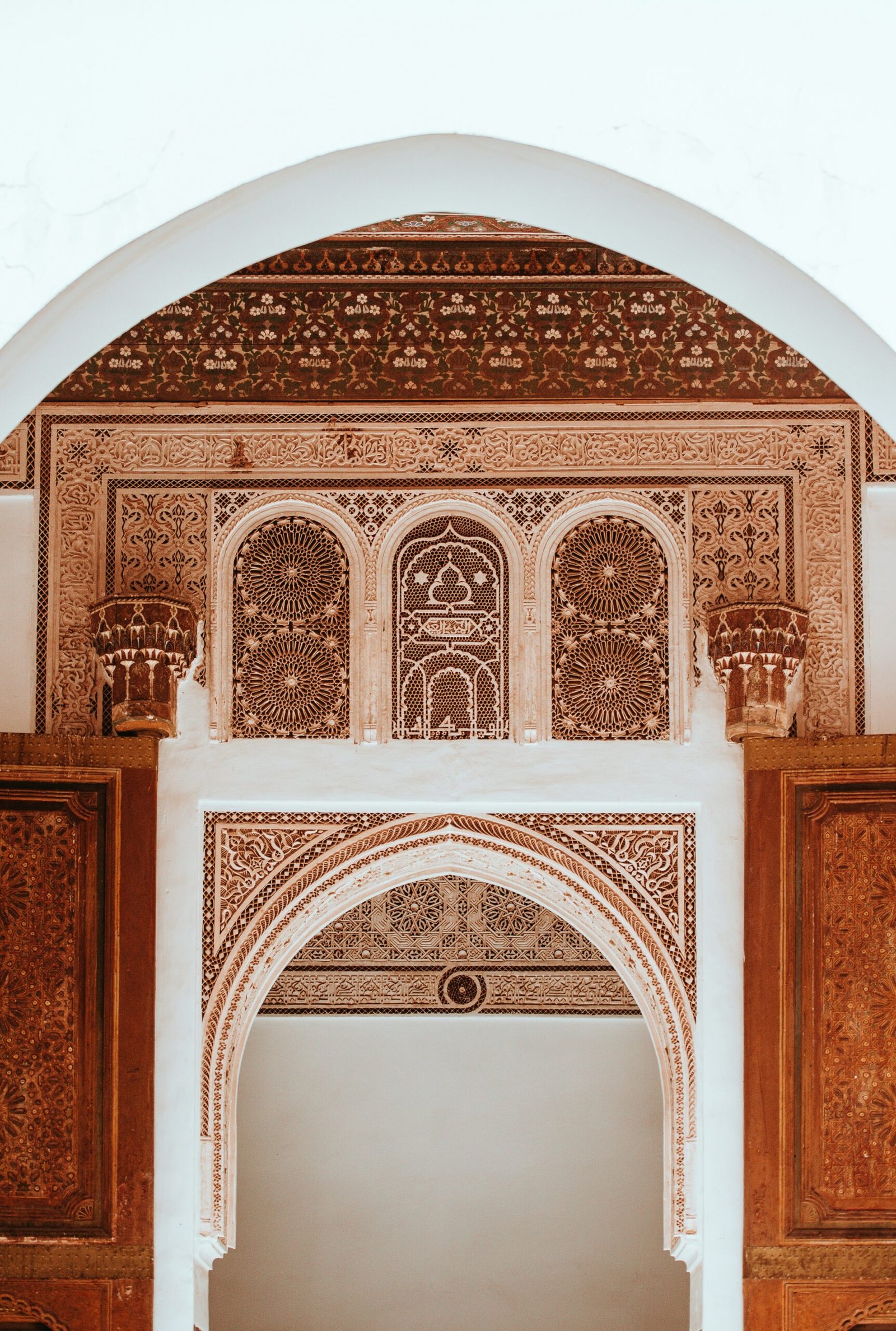
Andalusian influenced cities in Morocco : A Cultural Legacy That Still Lives Today
The Andalusian influenced cities in Morocco is one of the most important cultural forces behind the Morocco travelers experience today. It can be seen in the graceful arches of historic buildings, heard in classical musical traditions, tasted in dishes combining sweet and savory flavors, and discovered in the streets of ancient cities.
For centuries, Morocco and Al-Andalus were connected by far more than the short stretch of water separating North Africa from the Iberian Peninsula. People, armies, scholars, artists, merchants and dynasties moved between both shores, creating a shared cultural world that influenced the western Islamic Mediterranean.
The relationship became especially important after the gradual collapse of Muslim rule in Iberia. Waves of Muslim and Jewish communities from Al-Andalus crossed into North Africa, bringing traditions that became deeply woven into Moroccan society.
Today, Andalusian heritage is not simply part of Morocco’s distant past. It remains visible in its architecture, music, craftsmanship, food and urban life.
Quick Facts About Al-Andalus and Morocco
| Topic | Key Information |
|---|---|
| Al-Andalus | Name used for parts of the Iberian Peninsula that were under Muslim rule |
| Historical Period | 711 CE to 1492 CE |
| Connection with Morocco | Centuries of political, cultural, commercial and human exchange |
| Major Influences | Architecture, music, gardens, craftsmanship and cuisine |
| Important Moroccan Cities | Fez, Tetouan, Rabat, Salé and Chefchaouen |
| Major Turning Point | The fall of Granada in 1492 |
| Legacy Today | A living part of Moroccan cultural identity |
Morocco’s own history was closely connected to Al-Andalus long before the fall of Granada. The Almoravid and Almohad dynasties, based in Morocco, ruled territories on both sides of the Strait of Gibraltar and contributed to the development of artistic and architectural traditions shared across the region.
The Historical Connection Between Morocco and Al-Andalus
The story did not begin with refugees arriving in Morocco in 1492.
For centuries, the Strait of Gibraltar functioned as a connection between Morocco and the Iberian Peninsula. Moroccan-based dynasties governed parts of Al-Andalus, while people from Iberian cities also settled in Morocco.
This constant movement created an extraordinary exchange of ideas.
Architectural styles crossed the Strait. Musical traditions developed through connections between the western Islamic world. Scholars and religious figures travelled between major cities, while commercial networks connected both sides.
Rather than viewing Morocco and Al-Andalus as two completely separate civilizations, it is more accurate to understand them as regions with long periods of intense interaction.
A Shared Historical Timeline
| Date | Event |
|---|---|
| 711 CE | Muslim expansion into the Iberian Peninsula begins |
| 8th–10th centuries | Strong political and cultural connections develop between the Maghreb and Al-Andalus |
| 11th century | Almoravids connect Morocco with large areas of Iberia |
| 12th–13th centuries | Almohads rule territories in both North Africa and Al-Andalus |
| 13th–15th centuries | Muslim territories in Iberia gradually decline |
| 1492 | Granada falls, ending Muslim rule in Iberia |
| 15th–17th centuries | Major movements of Andalusian and Morisco communities into North Africa |
| Today | Andalusian heritage remains visible throughout Morocco |
The greatest cultural transfer did not happen through one single event. It was the result of centuries of exchange, followed by major migrations that gave Andalusian traditions a permanent place within Moroccan society.
The Fall of Granada and the Arrival of Andalusian Communities
The fall of Granada in 1492 was a decisive moment in the history of Al-Andalus.
Granada was the last major Muslim-ruled kingdom in Iberia. After its fall, the political world of Al-Andalus changed permanently.
Over the following decades, communities with Andalusian roots moved across the Mediterranean and the Strait of Gibraltar. Morocco became one of the most important destinations.
These arrivals included people from different backgrounds and professions. They brought urban traditions, craftsmanship, musical knowledge, culinary practices and intellectual traditions.
Their influence was especially important in northern Morocco and historic cities with existing links to Iberia.


In Tetouan, this legacy is particularly clear. The city became an important point of connection between Morocco and Andalusia and was rebuilt and shaped by Andalusian communities whose influence remains visible in its architecture and urban character.
Andalusian Architecture in Morocco
Perhaps the most immediately visible Andalusian influence in Morocco can be found in architecture.
However, Moroccan-Andalusian architecture should not be understood as a simple copy of buildings from Spain.
Over centuries, architectural traditions developed through exchanges between North Africa and Iberia. Moroccan dynasties contributed to artistic developments in Al-Andalus, while Andalusian forms and craftsmen influenced Morocco.
The result was a shared western Islamic architectural tradition often described as Andalusi-Maghribi or Hispano-Moorish.
Important Architectural Features
| Feature | Where You Can See It in Morocco |
|---|---|
| Horseshoe arches | Mosques, madrasas and historic gateways |
| Zellij tilework | Palaces, riads and religious buildings |
| Carved plaster | Historic interiors and royal architecture |
| Interior courtyards | Traditional riads and houses |
| Fountains | Riads, palaces and gardens |
| Geometric decoration | Religious and monumental architecture |
| Intricate wooden ceilings | Historic homes, madrasas and palaces |
| Enclosed gardens | Traditional Moroccan and royal gardens |
This architectural heritage demonstrates how local Moroccan traditions and Andalusian influences became closely connected over centuries.
You do not need to visit a museum to encounter it. You can walk beneath an arch, enter a traditional riad or listen to water flowing through a historic courtyard.
Fez and the Andalusian Legacy
Fez is one of the most important cities for understanding the connection between Morocco and Al-Andalus.
Its history includes the settlement of people from different parts of the Islamic world, including communities associated with Andalusian Iberia.
The historic Andalusiyyin Quarter itself reflects this connection.
Over time, Fez became one of North Africa’s most important centers of scholarship, craftsmanship and religious life.
Its architecture reflects a long process of cultural development rather than one isolated influence.
Why Fez Matters
| Experience | Andalusian Connection |
|---|---|
| Historic medina | Long history of cultural exchange |
| Andalusiyyin Quarter | Associated with early Andalusian settlers |
| Traditional craftsmanship | Shared western Islamic artistic traditions |
| Architecture | Andalusian influence combined with Moroccan innovation |
| Classical music | Important centre for Andalusian musical traditions |
For a traveler, Fez provides one of the richest opportunities to see how Andalusian heritage became part of something distinctly Moroccan.
Tetouan: Morocco’s Andalusian City
If one Moroccan city is especially associated with Andalusian heritage, it is Tetouan.
Its location in northern Morocco made it a natural point of contact with the Iberian Peninsula.
After the Reconquest, Andalusian refugees played an important role in rebuilding and shaping the city. Their history remains visible in Tetouan’s art, architecture and urban fabric.


Walking through Tetouan’s medina, visitors can notice a character that differs from many other Moroccan cities.
Its relationship with Andalusian traditions is visible in its architecture, craftsmanship and cultural identity.
Tetouan remains one of the best destinations for travelers interested in understanding the historical connection between Morocco and Al-Andalus.
Andalusian Music in Morocco
The influence of Al-Andalus can also be heard.
Andalusian music, often associated in Morocco with Al-Ala, remains one of the country’s most important classical musical traditions.
Its history is complex. Musical traditions developed over centuries through exchanges between Al-Andalus and North Africa, and Morocco itself played an important role in preserving and developing the repertoire.
Moroccan Andalusian music should not be viewed simply as a frozen survival from Iberia. The tradition continued to evolve in Morocco and became an important part of the country’s own cultural identity.
Elements of the Tradition
| Element | Description |
|---|---|
| Nawba | A large-scale musical suite central to the tradition |
| Orchestral performance | Traditional ensembles use a variety of instruments |
| Poetry | Classical poetic texts form an important part of performances |
| Regional traditions | Different Moroccan cities developed their own practices |
| Cultural transmission | Knowledge passed between generations of musicians |
For travelers interested in culture, hearing Andalusian music in Fez, Tetouan or another historic city can offer a completely different experience from modern Moroccan popular music.
How Al-Andalus Influenced Moroccan Cuisine
Andalusian influence can also be explored through food.
Moroccan cuisine developed through many different cultural and regional traditions, including Amazigh, Arab, Jewish, Mediterranean, African and Andalusian influences.
The legacy of Al-Andalus is often associated with sophisticated combinations of sweet and savory ingredients, the use of almonds and dried fruits, delicate pastries and elaborate dishes prepared for celebrations.
Culinary Traditions Often Associated With Andalusian Heritage
| Culinary Element | Role in Moroccan Cuisine |
|---|---|
| Almond-based pastries | Important in traditional sweets |
| Sweet and savory combinations | Common in celebratory dishes |
| Cinnamon and aromatic spices | Used in numerous classic recipes |
| Layered pastry | Associated with refined historic cooking traditions |
| Dried fruits and nuts | Frequently used in festive cuisine |
| Courtyard hospitality | Connected to urban traditions of receiving guests |
It is important to remember that Moroccan food cannot be reduced to a single historical influence. Its richness comes precisely from centuries of interaction.
The Andalusian contribution is one important layer within a much larger Moroccan culinary story.
Andalusian Gardens and the Art of Water
Another lasting influence can be seen in gardens.
In both Morocco and Al-Andalus, gardens were designed as enclosed spaces offering shade, water, greenery and calm.
The sound of fountains and flowing water became an important part of the experience.
Geometric planning often organized pathways, planting areas and water features.
This tradition can still be recognized in Moroccan riads and historic gardens.


The concept is especially meaningful in Morocco’s climate.
Behind a simple exterior wall, a traditional house can open into a peaceful interior world filled with plants, shade and water.
This inward-facing design remains one of the most memorable elements of traditional Moroccan architecture.
Andalusian Influence on Moroccan Craftsmanship
Morocco’s famous craftsmanship was also shaped by centuries of cultural exchange.
Artisans developed and preserved traditions involving wood, plaster, tile, metal and textiles.
Many of these artistic forms belong to a wider western Islamic tradition that connected Morocco with Al-Andalus.
Crafts to Discover
| Craft | What Makes It Special |
|---|---|
| Zellij | Hand-cut geometric tilework |
| Carved plaster | Detailed geometric and floral decoration |
| Cedarwood carving | Common in doors, ceilings and furniture |
| Traditional textiles | Regional patterns and weaving traditions |
| Metalwork | Decorative lamps, doors and household objects |
| Ceramics | Painted and geometric artistic traditions |
The beauty of Moroccan craftsmanship comes from the fact that these traditions continued to develop locally.
The result is not simply another culture preserved unchanged in Morocco. It is Moroccan culture shaped partly by centuries of interaction with Al-Andalus.
Rabat, Salé and the Andalusian Connection
Andalusian communities also influenced the Atlantic cities of Rabat and Salé.
Later migrations from Iberia contributed to the cultural development of the region, adding another layer to its complex history.
These cities became connected to trade, maritime activity and the wider political world of the western Mediterranean.
Today, visitors can explore historic walls, kasbahs and medinas while learning how communities from different backgrounds contributed to the development of the Moroccan Atlantic coast.
The story of Andalusian Morocco is therefore not limited to northern mountain cities.
It extends across major urban centers from Fez to the Atlantic.
Chefchaouen and Northern Morocco
Northern Morocco developed particularly strong connections with Andalusian culture because of its geographical proximity to Spain and its history of migration.
Chefchaouen, Tetouan, Tangier and other northern destinations became part of this wider cultural landscape.
The whitewashed and blue-painted buildings, mountain settings, traditional craftsmanship and distinctive regional identity make northern Morocco particularly rewarding for travelers interested in this chapter of history.
Best Places to Experience Andalusian Influence
| Destination | What to Discover |
|---|---|
| Tetouan | Strong Andalusian urban and architectural heritage |
| Fez | Andalusian connections in history, architecture and music |
| Chefchaouen | Northern Moroccan culture and historic links with Iberian communities |
| Rabat | Atlantic history and later Andalusian migrations |
| Salé | Historic urban culture connected to the Atlantic world |
| Tangier | A strategic gateway between Morocco and Europe |
| Marrakech | Hispano-Maghribi architectural traditions and craftsmanship |
Morocco and Al-Andalus: A Two-Way Cultural Exchange
One of the most important things to understand is that influence moved in both directions.
Morocco was not simply a country that received Andalusian culture after 1492.
Moroccan dynasties ruled in Al-Andalus. Moroccan scholars and religious figures participated in intellectual networks across the region. North African artistic traditions influenced Iberian architecture, while Andalusian traditions also contributed to cultural development in Morocco.
The Almoravid and Almohad periods were particularly important because these Moroccan-based empires controlled territories on both sides of the Strait and helped create a shared artistic environment.
This is why the cultural connection between Morocco and Al-Andalus is so fascinating.
It was a conversation across the Strait of Gibraltar that lasted for centuries.
How Andalusian Heritage Shapes Morocco Today
The Andalusian influence in Morocco is still alive.
It appears in formal musical performances. It survives through craft traditions. It influences how historic interiors are decorated and how cultural heritage is understood.
For modern Morocco, this heritage exists alongside Amazigh, Arab, Jewish, African, Mediterranean and other influences.
That diversity is one of the country’s greatest cultural strengths.
The Living Legacy Today
| Cultural Area | Andalusian Legacy in Morocco |
|---|---|
| Architecture | Arches, decoration, courtyards and shared Hispano-Maghribi forms |
| Music | Classical Andalusian musical traditions |
| Cuisine | Refined pastries and sweet-savory culinary traditions |
| Crafts | Tilework, plasterwork, woodwork and geometric design |
| Cities | Strongest associations in Tetouan and Fez |
| Gardens | Courtyards, fountains, shade and geometric planning |
| Identity | Part of Morocco’s broader multicultural heritage |
Frequently Asked Questions About Andalusian Influence in Morocco
What is the Andalusian influence in Morocco?
The Andalusian influence in Morocco refers to the lasting cultural connections between Morocco and Al-Andalus. These influences can be seen in architecture, music, craftsmanship, cuisine, gardens and the histories of several Moroccan cities.
When did Andalusian influence come to Morocco?
The relationship developed over centuries. Morocco and Al-Andalus were connected from the early Islamic period, while major migrations after the fall of Granada in 1492 and later expulsions brought additional communities and traditions to Morocco.
Which Moroccan city has the strongest Andalusian influence?
Tetouan is particularly important because of its history as a point of contact between Morocco and Andalusia and its reconstruction and development through Andalusian influence.
Is Andalusian music still performed in Morocco?
Yes. Andalusian classical music remains an important part of Moroccan musical heritage, particularly in cities with strong historical connections to this tradition. The repertoire has also developed within Morocco over time.
Did the Andalusians only influence Morocco after 1492?
No. Morocco and Al-Andalus had strong political and cultural connections for centuries before 1492. Moroccan-based dynasties such as the Almoravids and Almohads ruled territories in Iberia and contributed to a shared cultural world.
Can tourists visit places with Andalusian heritage in Morocco?
Yes. Tetouan, Fez, Chefchaouen, Rabat, Salé and northern Morocco are particularly interesting destinations for travelers exploring this history.
Discover Morocco’s Andalusian Heritage
To understand Morocco fully, it is necessary to look beyond a single civilization or dynasty.
Morocco’s identity was shaped by generations of Amazigh communities, Islamic dynasties, African connections, Jewish heritage, Mediterranean trade and centuries of exchange with Al-Andalus.
The Andalusian influence remains one of the most beautiful examples of that story.
Walk through Tetouan’s historic medina and you can see it in the streets and buildings. Explore Fez and you can discover it within the city’s history and artistic traditions. Listen to classical music and you can hear a tradition that crossed centuries and evolved into something uniquely Moroccan.
At Morocco Global Travel, we believe that discovering Morocco becomes more meaningful when travelers understand the stories behind the places they visit. A journey through Fez, Meknes, Chefchaouen and Tetouan can reveal the architecture, food, music and cultural traditions that connect Morocco with Al-Andalus.