The Idrisid Dynasty: Where Morocco’s Islamic History Took Shape
Morocco’s history is a story of civilizations, dynasties, cities and cultures that have developed over more than a thousand years. Among the earliest chapters of this story is the rise of the Idrisid Dynasty, a dynasty that played a decisive role in shaping the foundations of Islamic Morocco.
Long before Marrakech became one of Morocco’s most famous cities, before the Almoravids transformed the country, and centuries before the Alaouite dynasty came to power, the Idrisids established an important political and religious center in northern Morocco.
Their story is closely connected with three remarkable places: Volubilis, Moulay Idriss Zerhoun and Fez.
Today, travelers can still follow this fascinating historical journey. Roman ruins at Volubilis reveal the ancient civilizations that existed before the Idrisids, the town of Moulay Idriss preserves the memory of Morocco’s first dynasty, and the medina of Fez continues to reflect the extraordinary cultural importance that the city developed during and after the Idrisid period.
The Idrisids therefore represent much more than an early chapter in Moroccan history. They were part of the foundation upon which later Moroccan dynasties, cities and cultural traditions were built.
Who Were the Idrisids?
The Idrisid Dynasty emerged at the end of the eighth century during a period of political and religious change across North Africa.
Its founder was Idris ibn Abdallah, better known as Idris I. He arrived in the Maghreb after fleeing political persecution in the eastern Islamic world and eventually found support among the Amazigh communities around Volubilis.
In 788, Idris established himself at Volubilis, where he was recognized as a religious and political leader. He began consolidating his authority among local communities and laid the foundations of what would become one of Morocco’s earliest dynastic states.
His reign was short. Idris I died in 791, but the dynasty he founded continued through his son, Idris II.
| Historical figure | Role | Historical importance |
|---|---|---|
| Idris I | Founder of the dynasty | Established the Idrisid state and based his power at Volubilis |
| Idris II | Second major Idrisid ruler | Consolidated the dynasty and established Fez as its principal capital |
| Idrisid rulers | Early Moroccan dynasty | Helped develop Morocco’s early Islamic political and urban institutions |
| Fez | Major Idrisid capital | Became a lasting center of Moroccan religion, scholarship and culture |
The importance of the Idrisids lies not only in the territory they controlled but also in the institutions and cities they helped establish.
Idris I and the Rise of the First Moroccan Dynasty
When Idris I arrived in Morocco, Volubilis was already an ancient settlement with a long and complex history.
The city had been an important Mauritanian center before becoming a significant Roman settlement. Centuries of different civilizations had left their mark on the landscape.
For Idris I, however, Volubilis became something more: a political base from which he could establish his authority.
The location was strategically important, and the support of local Amazigh communities allowed him to strengthen his position.
For a traveler today, this creates an extraordinary historical connection.
Standing among the remains of Roman Volubilis, you are also standing in the place where Morocco’s first major Islamic dynasty began to take shape.
Why Was Volubilis Important?
Volubilis had already developed into a prosperous urban center before the arrival of Islam.
Its agricultural surroundings, strategic location and existing infrastructure made it an important settlement in northern Morocco.
The city’s history reflects one of the defining characteristics of Morocco itself: different civilizations did not simply disappear when new ones arrived. Their influences remained and became part of the country’s cultural landscape.
| Historical period | Influence at Volubilis |
|---|---|
| Mauritanian period | Development of the ancient city |
| Roman period | Monumental architecture, roads and urban development |
| Late Antique period | Christian and local cultural influences |
| Early Islamic period | Introduction of Islamic political and cultural structures |
| Idrisid period | Volubilis became the base of Idris I |
This mixture of civilizations is one of the reasons Volubilis remains such an important destination for travelers interested in Moroccan history.
Idris II and the Rise of Fez
If Idris I established the foundation, Idris II transformed the young Idrisid state.
Born shortly after the death of his father, Idris II eventually became the second major ruler of the dynasty. Under his leadership, the Idrisid state expanded and became more firmly organized.
His greatest historical legacy, however, was his connection with Fez.
Fez had already begun developing during the reign of Idris I, but Idris II expanded the settlement and moved the center of Idrisid authority there in the early ninth century.
The development of Fez would completely change the future of Morocco.


The Birth of a Moroccan Cultural Capital
Fez was not simply another medieval city.
Over the centuries, it became a center of religion, education, craftsmanship, commerce and intellectual life.
The original Idrisid city developed into what is now known as Fez el-Bali, the ancient medina that remains one of Morocco’s most extraordinary historic environments.
The city later expanded under other dynasties, but its Idrisid foundations remained an essential part of its identity.
| Period | Development of Fez |
|---|---|
| Idrisid period | Foundation and early development |
| Almoravid period | Expansion and reunification of the city |
| Almohad period | Major urban growth |
| Marinid period | Construction of Fez Jedid and major monuments |
| Modern period | Preservation of Fez as a major cultural and spiritual center |
This layered history is exactly what makes Fez so fascinating.
A visitor can walk through the same historic city while encountering architecture and traditions that belong to completely different periods.
The Two Foundations of Fez
One of the most interesting aspects of Fez’s early history is that the city developed through more than one settlement.
The early city grew on both sides of the Fez River, with different communities establishing themselves in separate quarters.
Over time, these settlements became closely connected and eventually developed into the great urban center that would dominate Moroccan cultural life for centuries.
The city attracted populations from different parts of the Islamic world, including communities arriving from Al-Andalus and North Africa.
This mixture helped give Fez its distinctive character.
Its architecture, cuisine, crafts, scholarship and traditions were influenced by different communities that settled there.
Fez as a Meeting Place of Cultures
| Community or influence | Contribution to Fez |
|---|---|
| Amazigh communities | Local traditions and regional influence |
| Arab communities | Language, religion and political culture |
| Andalusian arrivals | Architecture, craftsmanship, music and cultural traditions |
| North African communities | Commerce, scholarship and religious traditions |
| Later dynasties | Monumental architecture and urban expansion |
This cultural mixture is still visible today.
It can be seen in traditional architecture, Moroccan-Andalusian music, handicrafts, food and the extraordinary design of the medina.
The Idrisids and the Development of Islamic Morocco
The Idrisid period was important because it helped establish a permanent Islamic political and cultural center in Morocco.
The dynasty contributed to the development of cities, religious institutions and systems of political authority that would influence Morocco long after the Idrisids disappeared from power.
Fez became particularly important.
Religious education flourished, mosques and scholarly institutions developed, and the city gradually became one of the most important intellectual centers in the western Islamic world.
One of the most famous institutions associated with Fez is Al-Qarawiyyin, founded in the ninth century.
Its history is closely connected with the city’s development as a major center of Islamic learning.
For modern travelers, this provides another reason to explore Fez beyond its famous souks.
The city is not simply a place of beautiful architecture.
It is a city shaped by centuries of scholarship, faith and cultural exchange.
Moulay Idriss Zerhoun: The Town Named After Morocco’s Founder
Not far from Volubilis lies the beautiful hillside town of Moulay Idriss Zerhoun.
The town carries the name of Idris I and is closely associated with his legacy.


Its whitewashed buildings, narrow streets and dramatic position among the surrounding hills make it one of northern Morocco’s most distinctive destinations.
For travelers interested in Moroccan history, combining Volubilis and Moulay Idriss Zerhoun creates a particularly meaningful experience.
The two destinations reveal different sides of the same story.
| Destination | Historical connection |
|---|---|
| Volubilis | Ancient city and political base of Idris I |
| Moulay Idriss Zerhoun | Town associated with the founder of the Idrisid dynasty |
| Fez | Idrisid capital and later center of Moroccan scholarship and culture |
Together, they allow visitors to follow the story from the ancient world into the beginnings of Islamic Morocco.
What Made the Idrisid Dynasty Different?
The Idrisid state developed during a period when Morocco was still politically fragmented.
Different Amazigh communities, local rulers and external powers competed for influence.
The Idrisids gradually established a political structure that brought large areas of Morocco under a common authority.
Their legitimacy was also strongly connected with their descent from the Prophet Muhammad through his family.
This gave the dynasty an important religious dimension and helped strengthen its authority among communities that supported Idris I and his successors.
The dynasty therefore combined several elements:
| Element | Importance |
|---|---|
| Political authority | Helped unify territories under Idrisid rule |
| Religious legitimacy | Strengthened the position of the ruling family |
| Urban development | Encouraged the growth of Fez and other settlements |
| Cultural exchange | Connected Amazigh, Arab and Andalusian traditions |
| Islamic institutions | Contributed to the development of Morocco’s religious landscape |
These developments would influence the character of Morocco for centuries.
The Decline of the Idrisid Dynasty
The Idrisid state did not remain united forever.
After the death of Idris II in 828, the territory was divided among his sons. Political disagreements and rivalries gradually weakened the dynasty’s central authority.
As the ninth century progressed, other regional powers increased their influence.
By the tenth century, the Idrisids were caught between larger political forces competing for control of North Africa.
Their authority over Fez eventually disappeared, although members of the dynasty continued to hold influence in parts of northern Morocco for some time.
The political decline of the Idrisids eventually opened the way for new powers, particularly the Almoravids, who would later transform Morocco and establish Marrakech as a major imperial capital.
The end of Idrisid political rule, however, did not erase their historical influence.
Their most important legacy had already been established.
Fez had become a major Moroccan city.
From the Idrisids to Morocco’s Great Dynasties
The history of Morocco can be understood as a succession of dynasties, each building upon what came before.
The Idrisids were the beginning of this long dynastic tradition.
| Dynasty | Approximate period | Major historical association |
|---|---|---|
| Idrisids | 8th–10th centuries | Early Islamic Moroccan state and Fez |
| Almoravids | 11th–12th centuries | Marrakech and expansion across North Africa and Iberia |
| Almohads | 12th–13th centuries | Marrakech, monumental architecture and imperial expansion |
| Marinids | 13th–15th centuries | Fez and major madrasas |
| Saadians | 16th–17th centuries | Marrakech and the golden age of Saadian architecture |
| Alaouites | 17th century–present | Present Moroccan royal dynasty |
Following this timeline while traveling through Morocco gives an entirely different perspective on the country.
Fez tells the story of the Idrisids and Marinids.
Marrakech reveals the legacy of the Almoravids, Almohads and Saadians.
Meknes reflects the ambitions of the Alaouite ruler Moulay Ismail.
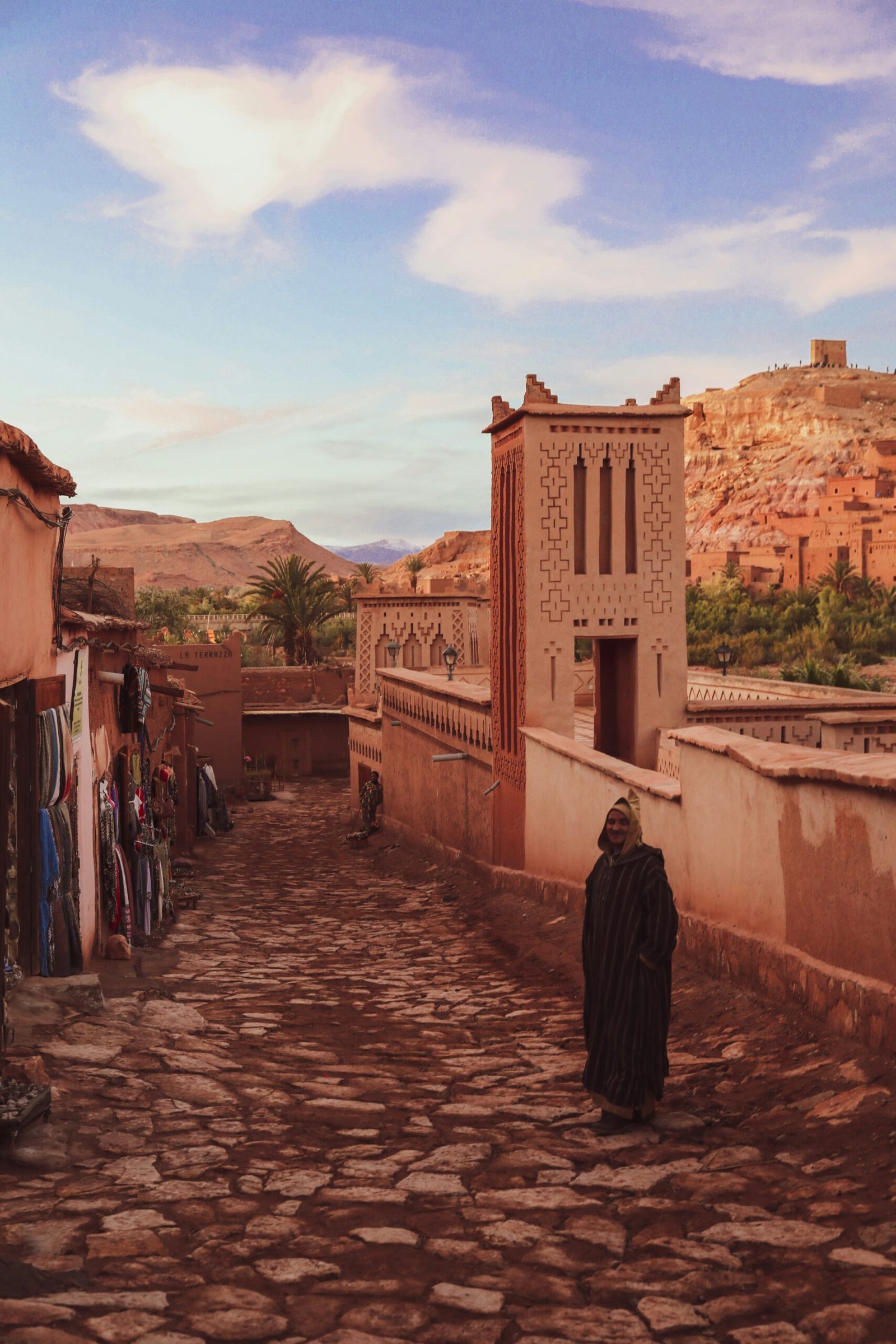
Aït Ben Haddou and the southern caravan routes reveal another side of Morocco’s history, connecting the country’s cities with the Sahara and trans-Saharan trade.
Why the Idrisid Dynasty Still Matters Today
It may seem surprising that a dynasty that ruled more than a thousand years ago can still be relevant to a modern traveler.
But Morocco is a country where history remains remarkably visible.
The Idrisid legacy can be experienced through places rather than simply read about in books.
You can stand among the ancient ruins of Volubilis.
You can look across the hills of Moulay Idriss Zerhoun.
You can enter the maze of Fez’s ancient medina.
You can see traditional crafts being produced using techniques passed down through generations.
And you can begin to understand why Fez became one of Morocco’s most important spiritual and cultural centers.


History becomes much more powerful when you can walk through it.
That is one of the greatest advantages of exploring Morocco with a carefully planned itinerary.
How to Experience Idrisid History on a Morocco Trip
Travelers who are particularly interested in Moroccan history should consider connecting the three major Idrisid destinations rather than visiting them separately.
A journey through Fez, Volubilis and Moulay Idriss Zerhoun can easily become part of a wider Moroccan itinerary.
| Travel style | Suggested route |
|---|---|
| Short historical experience | Fez → Volubilis → Moulay Idriss |
| Northern Morocco journey | Tangier → Chefchaouen → Fez → Volubilis |
| Imperial cities itinerary | Fez → Meknes → Rabat → Marrakech |
| Complete Moroccan history journey | Fez → Volubilis → Sahara → Aït Ben Haddou → Marrakech |
This type of journey allows travelers to understand Morocco chronologically rather than simply checking destinations off a list.
You can begin with the early Islamic period in Fez, discover the Roman world at Volubilis, explore later imperial capitals and eventually reach the Sahara, where centuries of trade connected Morocco with the wider African world.
The Best Historical Places to Visit
If the Idrisid period has sparked your interest in Moroccan history, these destinations deserve a place on your itinerary.
| Destination | Why visit | Ideal experience |
|---|---|---|
| Fez | One of Morocco’s oldest major cities | Medina, architecture, crafts and historic religious sites |
| Volubilis | Ancient archaeological site | Roman ruins, mosaics and the Idrisid connection |
| Moulay Idriss Zerhoun | Town associated with Idris I | Hillside views, traditional streets and cultural heritage |
| Meknes | Later imperial capital | Historic gates, royal architecture and old city |
| Marrakech | Major imperial capital | Palaces, monuments, souks and gardens |
| Aït Ben Haddou | Historic fortified settlement | Architecture and southern caravan-route history |
The beauty of Morocco is that these destinations can be combined into one journey.
Frequently Asked Questions About the Idrisid Dynasty
Who founded the Idrisid Dynasty?
The Idrisid Dynasty was founded by Idris I, who established himself at Volubilis at the end of the eighth century.
When did the Idrisid Dynasty rule Morocco?
The Idrisids emerged in the late eighth century and remained an important political force until the tenth century, although their territory and level of authority changed considerably during this period.
Who was Idris II?
Idris II was the son and successor of Idris I. He consolidated the Idrisid state and made Fez its principal capital, helping establish the city as an important center of Moroccan civilization.
Why is Fez important in Idrisid history?
Fez developed during the Idrisid period and became the dynasty’s principal capital. Over subsequent centuries, it grew into one of Morocco’s most important religious, intellectual and cultural centers.
Where is Idris I buried?
Idris I is traditionally associated with Moulay Idriss Zerhoun, where his mausoleum is located.
Can tourists visit Volubilis?
Yes. Volubilis is one of Morocco’s most important archaeological sites and is particularly worthwhile when combined with Moulay Idriss and Fez.
What dynasty came after the Idrisids?
The Idrisids were followed by other major Moroccan dynasties, including the Almoravids, Almohads, Marinids and Saadians, before the Alaouite dynasty established itself and continues to rule Morocco today.
Discover Morocco Through Its History
Morocco becomes far more fascinating when you understand the stories behind its cities.
The Idrisid Dynasty is one of the best places to begin.
From the ancient ruins of Volubilis, where Idris I established his political base, to Moulay Idriss Zerhoun, and eventually to the extraordinary medina of Fez, travelers can follow the beginnings of a Moroccan civilization whose influence can still be felt today.
At Morocco Global Travel, we believe that discovering Morocco should be more than visiting famous attractions.
It should be about understanding the people, places and stories that make each destination meaningful.
Whether you want to explore the history of Fez, visit Volubilis and Moulay Idriss, discover Morocco’s imperial cities, or combine cultural heritage with the Sahara Desert, we can design a private Moroccan journey around the experiences that interest you most.
Don’t just visit Morocco. Discover the history that made it what it is today.