
Morocco Independence : From Protectorate to Sovereign Nation


Morocco Independence 1956: A Turning Point in the Kingdom’s History
Morocco Independence 1956 was not a single event but the culmination of decades of political pressure, popular resistance, diplomacy and nationalist mobilisation.
For more than four decades, Morocco had lived under a French Protectorate established in 1912, while Spain controlled territories in the north and south. The Moroccan monarchy remained in place, but real political authority was heavily constrained by the colonial system.
By the middle of the 20th century, however, demands for independence had become increasingly powerful. Nationalist leaders, intellectuals, religious figures, urban communities and ordinary Moroccans increasingly called for the restoration of Moroccan sovereignty.
At the centre of this movement stood Sultan Mohammed V, whose relationship with the nationalist movement transformed him into one of the most important figures in modern Moroccan history.
The achievement of independence in 1956 opened an entirely new chapter: Morocco had to rebuild its institutions, unify territories, strengthen its economy and define its place in a rapidly changing world.
Morocco Before Independence
To understand why independence mattered so deeply, it is important to look at Morocco’s position under the Protectorate.
The Treaty of Fez in 1912 established French control over most of Morocco. Spain administered separate zones, while Tangier eventually operated under an international administration.
The Protectorate transformed Moroccan political and economic life while leaving the monarchy formally intact.
| Area | Situation During the Protectorate |
|---|---|
| Monarchy | Sultan remained the symbolic sovereign |
| Administration | French authorities exercised extensive political control |
| Northern Morocco | Predominantly under Spanish administration |
| Southern territories | Areas administered by Spain |
| Tangier | Internationally administered zone |
| Economy | Increasingly integrated into French colonial structures |
| Cities | European-style new towns developed beside historic medinas |
| National politics | Moroccan nationalist movements gradually expanded |
This complicated arrangement meant that independence would eventually require more than simply ending French administration. Morocco also needed to restore national authority across territories that had been administered differently.
The Rise of Moroccan Nationalism
During the 1920s and 1930s, opposition to colonial rule increasingly developed into organised nationalism.
Moroccan intellectuals and political activists began demanding greater political participation, legal equality and eventually complete independence.
The nationalist movement gained particular strength among educated urban populations, although opposition to colonial rule was by no means limited to the major cities.
A major turning point came in 1930, when the French authorities introduced what became known as the Berber Dahir. Although the measure was presented as an administrative and legal reform concerning customary law in Amazigh-majority areas, nationalists viewed it as an attempt to divide Moroccan society.
The controversy helped strengthen a broader Moroccan national consciousness.


The 1944 Independence Manifesto
One of the most important moments in Morocco’s road to independence came in January 1944.
The Istiqlal Party, whose name means “Independence,” presented an independence manifesto calling for Morocco to become a sovereign state.
The document represented a major escalation in nationalist politics.
Rather than asking simply for reforms within the Protectorate, Moroccan nationalists were openly demanding independence.
Sultan Mohammed V increasingly became associated with these aspirations.
His position was particularly important because the monarchy provided a historic institution around which different elements of Moroccan society could rally.
Why the 1944 Manifesto Was Important
| Development | Historical Importance |
|---|---|
| Independence formally demanded | Nationalists moved beyond calls for limited reform |
| Istiqlal gained prominence | Political organisation of the independence movement strengthened |
| Mohammed V supported nationalist aspirations | The monarchy became closely associated with sovereignty |
| Colonial authorities resisted | Tensions between the Protectorate and Moroccan nationalists intensified |
| Popular nationalism expanded | Independence became a central political objective |
The years that followed were marked by increasing tension between Moroccan nationalists and French authorities.
Mohammed V and the Struggle for Independence

Few individuals played a more important role in Morocco’s independence story than Mohammed V.
As Sultan, he occupied a unique position. He was simultaneously the traditional ruler of Morocco and an increasingly important symbol of national sovereignty.
During the Second World War, Mohammed V’s international standing also grew. His refusal to accept discriminatory measures against Moroccan Jews under the Vichy regime became an important part of his historical legacy.
By the late 1940s and early 1950s, the relationship between the Sultan and French authorities had become increasingly difficult.
Mohammed V increasingly supported the principle of Moroccan sovereignty, while French authorities sought to maintain the existing political order.
The Tangier Speech of 1947
Mohammed V’s visit to Tangier in 1947 became another significant moment in the nationalist movement.
Tangier’s international status made it an especially important setting for the Sultan to articulate Morocco’s national aspirations before an international audience.
The speech strengthened his image as a national leader and demonstrated that Morocco’s political future could not easily be separated from the wider international debate surrounding colonialism and self-determination.
For Moroccan nationalists, the Sultan was becoming much more than a traditional monarch.
He was becoming the symbol of a country seeking to recover its sovereignty.
The Crisis of 1953: Mohammed V in Exile
The conflict reached a dramatic point in August 1953.
French authorities removed Mohammed V from the throne and sent him into exile, first to Corsica and later to Madagascar.
His cousin, Mohammed Ben Arafa, was installed as Sultan.
The decision was intended to weaken nationalist opposition.
Instead, it had almost the opposite effect.
Mohammed V’s exile transformed him into an even stronger symbol of Moroccan resistance. His absence generated widespread public anger, while nationalist opposition intensified.

Why the Exile Backfired
The removal of Mohammed V had several consequences:
| Consequence | Effect |
|---|---|
| Mohammed V became a symbol of resistance | His popularity increased |
| Nationalist activity intensified | Opposition to the Protectorate became stronger |
| Public unrest expanded | Colonial authorities faced growing instability |
| Political negotiations became increasingly necessary | Maintaining the old system became more difficult |
| The monarchy became linked to independence | Sovereignty and the Sultan became closely connected |
Rather than separating the monarchy from the independence movement, the exile helped bring the two together.
Mohammed V Returns to Morocco
By 1955, it had become increasingly clear that the existing political arrangement could not continue indefinitely.
Negotiations eventually led to Mohammed V’s return.
When he came back to Morocco in November 1955, enormous crowds welcomed him.
His return was more than the restoration of a monarch.
For many Moroccans, it represented the return of national dignity and the beginning of the final stage toward independence.
The political landscape had changed dramatically since his exile two years earlier.
Morocco Becomes Independent in 1956

Morocco regained its independence from France in 1956.
The Franco-Moroccan declaration of independence was signed on 2 March 1956, formally ending the French Protectorate.
Spain subsequently relinquished much of its protectorate administration in northern Morocco, with further agreements concerning Spanish-controlled territories following during the same year.
For Morocco, 1956 marked the restoration of sovereignty after approximately 44 years of the French Protectorate.
But independence was not the end of the story.
It was the beginning of an enormous national project.
What Changed After Independence?
The newly independent Moroccan state faced a long list of challenges.
The country needed to establish stronger national institutions, integrate territories formerly administered under different systems, develop its economy and create a modern state capable of operating independently.
| Challenge | Post-Independence Objective |
|---|---|
| Political administration | Build stronger Moroccan state institutions |
| Territorial integration | Bring previously divided administrative areas together |
| Military forces | Develop national armed forces |
| Education | Expand Moroccan control and access to education |
| Economy | Reduce dependence on colonial structures |
| Infrastructure | Continue development of roads, ports and public services |
| Diplomacy | Establish Morocco’s independent international identity |
| National identity | Strengthen unity around Moroccan sovereignty |
This transition required both political leadership and institutional rebuilding.
The Creation of the Modern Moroccan State
Independence allowed Morocco to reshape its institutions around national sovereignty.
Mohammed V became King of Morocco, reflecting the country’s transition from the terminology of the Sultanate toward the modern Moroccan monarchy.
The monarchy remained central to political life.
At the same time, political parties such as Istiqlal played important roles in shaping the country’s early post-independence political environment.
Morocco also became increasingly active internationally, establishing diplomatic relations and participating in the emerging community of independent states.
The country was no longer primarily viewed through the framework of European colonial administration.
It was becoming an independent actor in its own right.
From Mohammed V to Modern Morocco
Mohammed V died in 1961, only five years after independence.
He was succeeded by his son, Hassan II, whose reign would dominate Moroccan political life for the remainder of the 20th century.
Later, in 1999, Hassan II was succeeded by King Mohammed VI.
The Morocco visitors experience today has therefore been shaped by several generations of post-independence development.
| Period | Major Development |
|---|---|
| 1956 | Independence restored |
| 1957 | Mohammed V formally assumes the title of King |
| 1961 | Hassan II succeeds Mohammed V |
| 1960s–1990s | State institutions and infrastructure continue developing |
| 1999 | Mohammed VI becomes King |
| 21st century | Morocco expands tourism, infrastructure and international connections |
How Independence Shaped Morocco’s Cities
Morocco’s independence also influenced the way its cities developed.
During the Protectorate, European-style ville nouvelles had been built alongside historic medinas.
After independence, Morocco inherited this urban landscape but gradually developed it according to its own national priorities.

Today, visitors can often see this layered history within a single city.
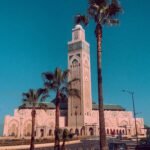
A walk through Rabat, Casablanca, Fez or Marrakech can reveal traditional medinas, colonial-era architecture and modern Moroccan development existing side by side.
This makes Morocco particularly fascinating for travellers interested in history: the country’s past is not confined to museums.
It is visible in its streets, buildings, neighbourhoods and monuments.
Morocco Independence and the Places You Can Visit Today
The story of independence becomes much easier to understand when experienced through Morocco’s historical destinations.
| Destination | Historical Connection |
|---|---|
| Rabat | Capital and major centre of modern Moroccan political history |
| Casablanca | Major economic city and important centre during the Protectorate and independence era |
| Fez | Historic royal, religious and intellectual centre |
| Tangier | Important international city during the colonial period |
| Marrakech | Former imperial capital with centuries of royal history |
| Meknes | Major imperial city associated with Morocco’s Alaouite history |
| Volubilis | Roman-era archaeological site showing Morocco’s much older history |
The independence story is therefore only one chapter in a much larger historical journey.
Why Morocco Independence 1956 Still Matters Today
The events of 1956 continue to influence Morocco’s national identity.
Independence represented the restoration of sovereignty, but it also strengthened the connection between the Moroccan monarchy, national identity and territorial unity.
The story explains why Mohammed V occupies such an important place in Moroccan memory and why the period leading to independence remains present in museums, monuments, public spaces and national commemorations.
For travellers, understanding this history adds another dimension to visiting Morocco.
A medina is no longer simply a maze of narrow streets. A royal palace is no longer simply an impressive building. A city such as Rabat or Fez becomes part of a much larger story about Morocco’s evolution.
Frequently Asked Questions About Morocco Independence
When did Morocco gain independence?
Morocco regained independence from France on 2 March 1956. Spain subsequently ended its protectorate administration in northern Morocco during 1956.
Who was the Moroccan ruler at independence?
Mohammed V was the ruler of Morocco during the independence process. He became one of the principal symbols of Moroccan sovereignty.
Why was Mohammed V exiled?
French authorities removed Mohammed V in 1953 because of the growing political conflict surrounding nationalist demands and his relationship with the independence movement.
What happened when Mohammed V returned?
Mohammed V returned to Morocco in November 1955 to enormous public celebrations. His return helped pave the way for the final negotiations that resulted in independence in 1956.
What was the Istiqlal Party?
Istiqlal, meaning “Independence,” was a major Moroccan nationalist political movement that played an important role in the campaign for independence.
Did Spain control parts of Morocco?
Yes. Spain administered protectorate territories in northern Morocco and other areas. The end of Spanish control occurred through agreements during and after the independence process.
What happened to Morocco after independence?
After 1956, Morocco began building and consolidating its independent state institutions, economy, military, diplomatic relationships and national administration.
Experience Morocco Through Its History
Morocco’s independence in 1956 is one of the most important chapters in the country’s modern history, but it makes the most sense when viewed alongside the centuries that came before it.
From the Roman ruins of Volubilis to the imperial cities of Fez and Marrakech, from the kasbahs of southern Morocco to the royal capital of Rabat, the country offers an extraordinary opportunity to experience history rather than simply read about it.
At Morocco Global Travel, we believe the best Moroccan journey is one that connects the places you visit with the stories behind them. Whether you are exploring the imperial cities, crossing the Atlas Mountains, discovering ancient kasbahs or spending a night beneath the Sahara stars, our journeys can be designed around the history, culture and landscapes that make Morocco unique.