Best Marinid Dynasty History : Fez As heart Morocco
Morocco’s history is shaped by powerful dynasties, ambitious rulers and cities that became centers of culture long after their political importance had faded. Among them, the Marinid Dynasty occupies a particularly important place. Rising to prominence in the 13th century, the Marinids inherited a Morocco emerging from the long rule of the Almohads and gradually transformed Fez into one of the most important intellectual, religious and artistic centers of the medieval western Islamic world.
The Marinid period, traditionally dated from 1244 to 1465, was marked by political expansion, architectural ambition and an extraordinary investment in religious education. The dynasty made Fez its principal center and commissioned mosques, madrasas, gates, palaces and other institutions whose decorative language still defines much of the city’s historic character.
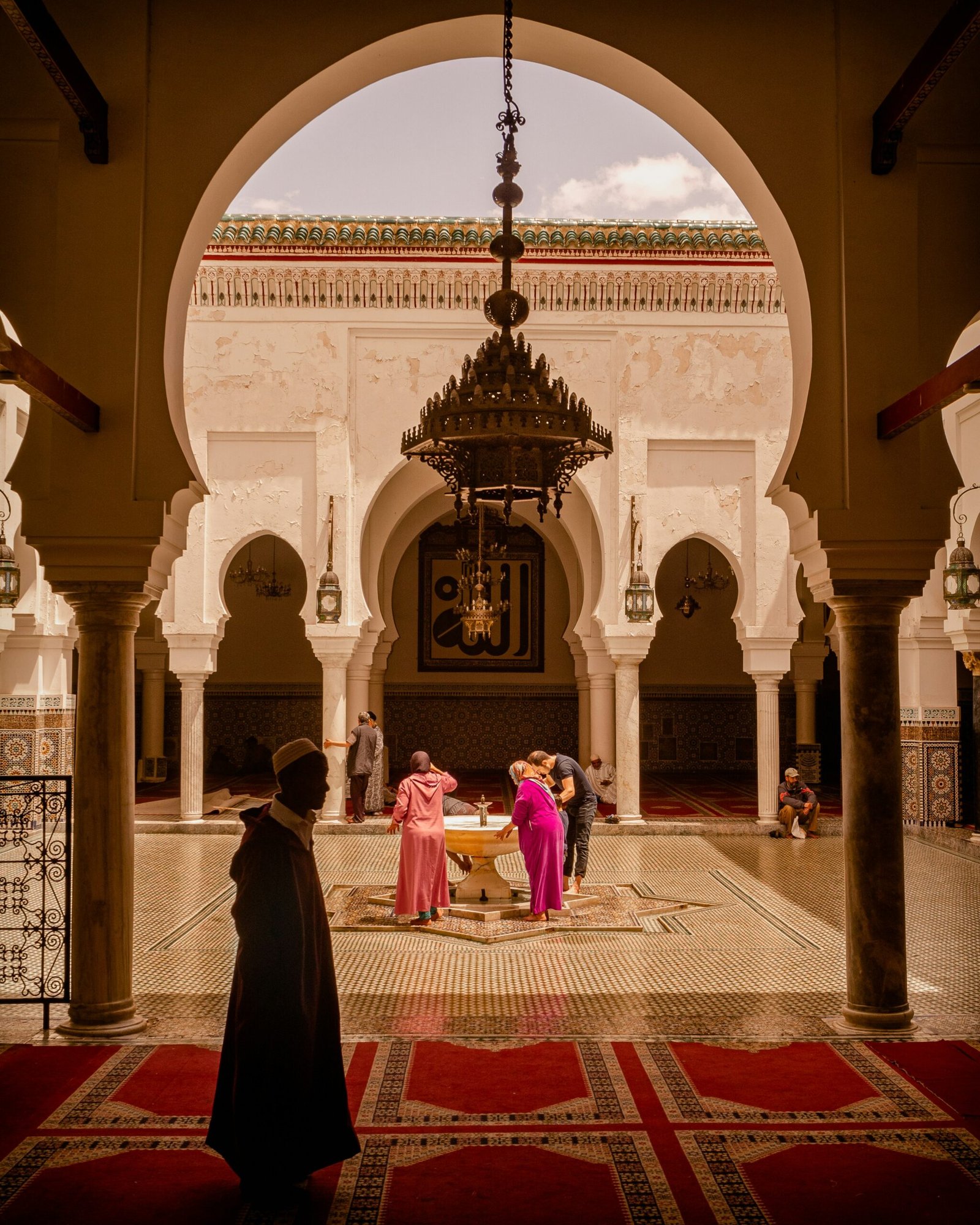
For travelers exploring Morocco today, understanding the Marinids adds another dimension to visiting Fez. Behind the carved cedar, geometric zellij, stucco decoration and historic courtyards lies the story of a dynasty that helped shape the medieval city visitors can still walk through today.
Who Were the Marinids?
The Marinids were an Amazigh dynasty associated with the Zenata tribal confederation. They emerged during a period when Almohad political authority was weakening and competing powers were beginning to reshape North Africa.
Rather than emerging from a major imperial capital, the Marinids gradually built their influence through military campaigns and territorial expansion. Their rise eventually brought them into direct conflict with the Almohads, whose political dominance in Morocco had lasted for much of the previous century.
By the middle of the 13th century, the Marinids had established themselves as a major force in Morocco.
| Marinid Era | Historical Significance |
|---|---|
| 1244 CE | Beginning of the Marinid period traditionally used in Moroccan dynastic history |
| 13th century | Marinid power expands across Morocco |
| 1248 CE | Marinid control reaches Fez |
| 1269 CE | Marrakech falls to the Marinids, marking the effective end of Almohad rule in Morocco |
| 14th century | Height of Marinid cultural and architectural activity |
| 1358 CE | Death of Abu Inan Faris becomes an important turning point in the dynasty’s decline |
| 1465 CE | End of the Marinid dynasty |
The Moroccan National Tourist Office dates the Marinid dynasty from 1244 to 1465 and identifies Fez as its capital.
How Did the Marinids Defeat the Almohads?
The Marinid rise cannot be separated from the decline of Almohad authority.
The Almohad Empire had once stretched across large parts of North Africa and Al-Andalus. However, political fragmentation, military defeats and internal struggles gradually weakened its control.
The Marinids took advantage of this changing political landscape.
Their campaigns progressively brought important territories under their control. Fez became a crucial base, and by 1269, the Marinids had captured Marrakech, effectively ending Almohad dominance in Morocco.
This transition was more than a change of rulers. It marked the beginning of a different political and cultural chapter in Moroccan history.
The Almohads had built an expansive empire centered on religious reform and military power. The Marinids increasingly became known for strengthening cities, supporting religious institutions and developing a distinctive architectural tradition.
Why Did Fez Become So Important Under the Marinids?
If Marrakech represented the great imperial ambitions of the Almoravids and Almohads, Fez became the defining city of Marinid Morocco.
The city had already been founded centuries earlier under the Idrisid dynasty. By the Marinid period, however, Fez was perfectly positioned to become a major political and intellectual center.
The Marinids invested heavily in the city, constructing religious schools, mosques, public buildings and urban infrastructure.
Fez’s importance was not simply political. It was also a center of scholarship, craftsmanship, religious learning and trade.
The city connected different parts of Morocco with wider commercial and intellectual networks. Its scholars attracted students, while its artisans developed increasingly sophisticated traditions in wood carving, stucco, tilework and metalwork.
Today, walking through the Fez medina provides an unusually direct connection to this period of Moroccan history.
The Marinids and the Golden Age of Fez
The Marinid period is often remembered for the extraordinary development of Fez.
Rather than simply expanding the city, Marinid rulers used architecture to demonstrate authority, religious commitment and cultural sophistication.
Their buildings combined practical functions with elaborate decoration.
| Architectural Element | Characteristic Marinid Contribution |
|---|---|
| Zellij | Complex geometric tile patterns |
| Carved cedar | Detailed ceilings, doors and decorative panels |
| Stucco | Intricate geometric and vegetal decoration |
| Glazed tiles | Distinctive green and other colored roof finishes |
| Madrasas | Institutions combining education, religion and architecture |
| Mosques | Places of worship integrated into urban neighborhoods |
| Courtyards | Carefully designed central spaces providing light and tranquility |
These elements would become central to the visual identity of historic Moroccan architecture.
The Marinid legacy is particularly visible in Fez, where historic buildings preserve the relationship between scholarship, religion, craftsmanship and urban life.
The Marinid Madrasas: Schools That Became Architectural Masterpieces
One of the Marinids’ most important contributions was their support for madrasas, institutions dedicated to religious and scholarly education.
These were not simply schools in the modern sense.
A madrasa could include classrooms, prayer spaces, accommodation for students and beautifully decorated communal areas. Their architecture reflected the importance that Marinid rulers placed on knowledge and religious scholarship.
Among the most famous examples associated with the Marinid period are the Bou Inania Madrasa and Al-Attarine Madrasa in Fez.
The decoration is remarkable because almost every surface can become part of the architectural composition.
Geometric zellij, carved wood and sculpted stucco work together to create interiors that are simultaneously educational spaces, religious environments and works of art.
For visitors today, these madrasas offer some of the clearest visual evidence of Marinid Morocco.
Abu Yusuf Yaqub: The Ruler Who Strengthened Marinid Power
Among the dynasty’s most important rulers was Abu Yusuf Yaqub, who played a central role in consolidating Marinid authority.
His reign was characterized by military campaigns against remaining Almohad strongholds and efforts to strengthen Marinid control over Morocco.
He also recognized the importance of Fez and its political and cultural position.
Under Marinid rule, the city continued to grow in importance, while Marrakech remained significant but no longer occupied the same central position it had held under the Almoravids and Almohads.
This shift between Marrakech and Fez is one of the most fascinating themes in Moroccan history: different dynasties repeatedly elevated different cities according to their political ambitions.
Abu Inan Faris and the Height of Marinid Culture
Another major Marinid ruler was Abu Inan Faris, whose reign is associated with some of the dynasty’s most impressive architectural achievements.
His period represents an important high point in Marinid cultural life.
The construction and development of religious institutions demonstrated the dynasty’s continued commitment to scholarship and architecture.
But Abu Inan’s death in 1358 also became an important turning point. Political instability increasingly weakened the dynasty, and later Marinid rulers struggled to maintain the same degree of centralized authority.
This illustrates an important pattern in Moroccan history: dynasties could reach extraordinary cultural heights while simultaneously becoming politically fragile.
Marinid Architecture: What Makes It Different?
Marinid architecture inherited ideas from earlier Moroccan dynasties but developed them into an exceptionally refined decorative style.
The emphasis was not necessarily on monumental size. Instead, the Marinids often achieved grandeur through detail.
A visitor entering a Marinid-era building may encounter a relatively modest exterior followed by an astonishing interior filled with geometric tilework, carved cedar, delicate stucco and carefully proportioned courtyards.
This approach helped establish visual traditions that remain strongly associated with Moroccan architecture today.
The decorative vocabulary developed during this period would influence later Moroccan building traditions, making the Marinid era essential to understanding the country’s artistic heritage.
Chellah: A Place Where Several Eras Meet
Another important historical site associated with the Marinid period is Chellah in Rabat.
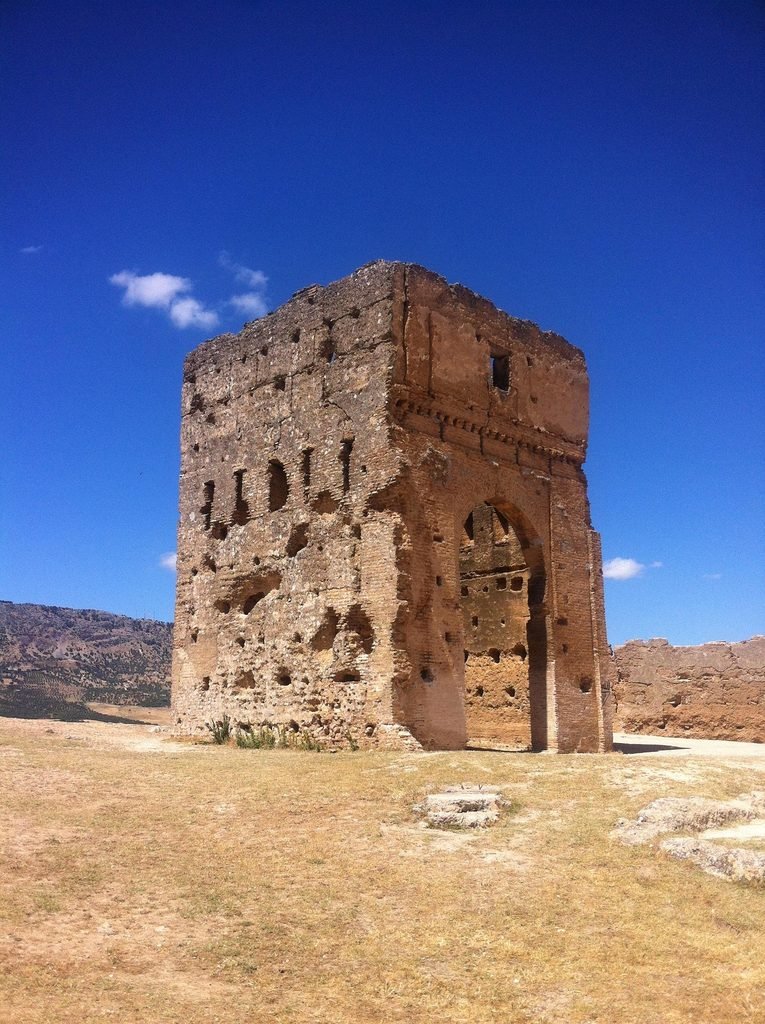
Chellah is particularly fascinating because it contains layers of Moroccan history from different eras. Ancient Roman remains exist alongside Islamic and Marinid structures.
The Marinids transformed the site into a religious complex and necropolis.
Today, its ruins create an unusual historical landscape where ancient Roman stones, medieval Islamic architecture, gardens and atmospheric ruins exist side by side.
For travelers interested in Moroccan history, Chellah demonstrates something fundamental about the country: Morocco was never shaped by one civilization alone. Different periods built upon what came before them.
Did the Marinids Control Al-Andalus?
The Marinids also looked north toward the Iberian Peninsula.
Like earlier Moroccan dynasties, they became involved in the political and military struggles of Al-Andalus.
Their intervention was motivated partly by the desire to support Muslim territories against expanding Christian kingdoms.
However, the political situation in Iberia had changed significantly since the height of Almoravid and Almohad power. Christian kingdoms were gaining territory, and maintaining a lasting Moroccan presence across the Strait of Gibraltar became increasingly difficult.
The Marinids therefore could not recreate the vast Andalusian empire once controlled by earlier dynasties.
Their principal legacy remained centered in Morocco itself, particularly in Fez and other major cities.
The Marinids and Moroccan Trade
Trade was another important component of Marinid Morocco.
Fez’s geographical position allowed it to function as a meeting point between northern Morocco, the Atlantic world, the Mediterranean and trans-Saharan routes.
Merchants carried goods across these networks, while craftsmen in Moroccan cities produced textiles, ceramics, leather goods, metalwork and other products.
The famous artisanal traditions associated with Fez therefore cannot be separated from the city’s medieval commercial development.
This is still visible today in the medina, where workshops and markets continue traditions that have survived for generations.
Why Did the Marinid Dynasty Decline?
The Marinid decline was gradual rather than the result of a single event.
After the death of Abu Inan Faris in 1358, political instability increased. Successive rulers struggled with internal divisions, competing power centers and weakening central authority.
The dynasty increasingly relied on powerful officials and regional actors, making centralized control more difficult.
At the same time, European powers were becoming increasingly active along Morocco’s Atlantic and Mediterranean coasts.
By the 15th century, Marinid authority had weakened considerably.
In 1465, the dynasty finally came to an end, opening the way for a new chapter in Moroccan history.
| Period | Marinid Development |
|---|---|
| Early 13th century | Marinid power begins expanding |
| 1244 | Traditional beginning of the Marinid period |
| 1248 | Control of Fez established |
| 1269 | Marrakech captured |
| 14th century | Major period of architectural and intellectual development |
| 1358 | Death of Abu Inan Faris and beginning of serious political decline |
| 15th century | Marinid authority continues weakening |
| 1465 | End of Marinid rule |
What Did the Marinids Leave Behind?
The Marinids may no longer rule Morocco, but their legacy is everywhere.
Fez is perhaps the greatest example.
Its historic medina contains architectural traditions developed and refined during the Marinid period. Madrasas, mosques, fountains, gates and decorative arts all tell the story of a society that placed enormous value on education, craftsmanship and religious life.
The Moroccan National Tourist Office specifically highlights Marinid contributions including madrasas, mosques, religious institutions and the decorative traditions of wood, stucco and glazed tile.
The dynasty’s influence therefore extends far beyond a list of medieval rulers.
It helped establish an architectural and cultural language that remains recognizably Moroccan.
The Marinid Dynasty and Modern Morocco
One of the most rewarding aspects of Moroccan history is that the past is rarely hidden behind museum glass.
In Fez, history is part of everyday life.
You can walk through narrow streets that follow centuries-old urban patterns, enter historic religious schools, watch artisans work with traditional materials and explore markets that preserve the atmosphere of a medieval commercial city.
This is why learning about the Marinids before visiting Fez can completely change the way you experience the destination.
Instead of seeing decorative tilework simply as beautiful craftsmanship, you begin to recognize it as part of a much longer historical tradition.
Instead of seeing an old madrasa as an attractive monument, you understand its role in education and religious life.
And instead of seeing Fez simply as one of Morocco’s famous destinations, you begin to understand why the city became one of the country’s great historical capitals.
Best Places to Experience Marinid History in Morocco
| Place | Why It Matters |
|---|---|
| Fez Medina | The strongest destination for experiencing Marinid urban and architectural heritage |
| Bou Inania Madrasa | One of the most impressive examples of Marinid religious architecture |
| Al-Attarine Madrasa | Famous for its intricate decorative craftsmanship |
| Chellah, Rabat | Marinid necropolis built within a much older archaeological landscape |
| Marrakech | Important for understanding the transition from Almohad to Marinid political power |
| Historic Moroccan medinas | Reveal the long-term influence of medieval architectural traditions |
Why the Marinid Dynasty Still Matters
The Marinids occupy a fascinating position between two of Morocco’s great historical periods.
They inherited a kingdom transformed by the Almoravids and Almohads, yet they created something distinctly their own.
Their greatest achievement may not have been the creation of the largest Moroccan empire. Instead, it was the transformation of Fez into a major center of scholarship, religion, craftsmanship and architecture.
Their buildings remind us that political power is temporary, while cultural achievements can survive for centuries.
The Marinid dynasty eventually disappeared, but its architectural language remains visible in the walls, courtyards, madrasas and streets of Morocco.
Frequently Asked Questions About the Marinid Dynasty
When did the Marinid Dynasty begin?
The Marinid period is traditionally dated from 1244 CE, although the dynasty’s rise began earlier during the decline of Almohad authority.
Who founded the Marinid Dynasty?
The dynasty emerged from the Zenata Amazigh tribes, with Abu Yahya playing an important role in establishing Marinid power in Morocco.
What was the capital of the Marinid Dynasty?
Fez was the principal capital and became the center of Marinid political and cultural life.
When did the Marinids capture Marrakech?
The Marinids captured Marrakech in 1269, effectively bringing Almohad political dominance in Morocco to an end.
What are the Marinids famous for?
The Marinids are particularly remembered for their investment in Fez, madrasas, mosques, religious institutions, scholarship and highly detailed Moroccan architecture.
What happened to the Marinid Dynasty?
Political instability weakened the dynasty during the 14th and 15th centuries. Marinid rule ended in 1465, after which Morocco entered another period of political transformation.
Discover Morocco Through Its History
Morocco becomes even more fascinating when its destinations are connected to the dynasties that shaped them.
A journey through Fez is not simply a visit to an old city. It is an opportunity to step into the world created by centuries of Moroccan rulers, scholars, craftsmen and merchants. The Marinid era is one of the most important chapters in that story.
At Morocco Global Travel, we believe that the best Moroccan journeys should go beyond sightseeing. Our private tours can connect the places you visit with the history, architecture and culture that make them meaningful, creating an experience that feels personal rather than simply following a standard route.
Whether you want to explore the historic streets of Fez, discover Morocco’s imperial cities, combine cultural heritage with the Sahara Desert, or build a private journey around the country’s fascinating dynasties, Morocco’s history can become part of the journey itself.