10 Things to know before visiting morocco
If you’re planning your first trip to Morocco, a little preparation can make a big difference. Morocco is welcoming, fascinating, and relatively easy to explore, but it also has its own customs, rhythms, transportation challenges, and travel habits that may surprise first-time visitors.
Here are 10 Things to know before visiting morocco , including practical advice about money, bargaining, transportation, clothing, food, accommodation, desert tours, and everyday life.
1. Morocco Is More Diverse Than You Expect
Many first-time visitors picture Morocco as Marrakech, camels, and the Sahara. While these are important parts of the experience, Morocco is much more diverse.


| Region | What You Can Experience |
|---|---|
| Marrakech | Medina, souks, palaces, gardens |
| Fes | History, crafts, traditional Medina |
| Chefchaouen | Blue streets, Rif Mountains |
| Atlas Mountains | Villages, hiking, scenery |
| Merzouga | Sahara dunes, camel trekking |
| Essaouira | Atlantic coast, seafood, beaches |
| Tangier | Northern Morocco, Mediterranean atmosphere |
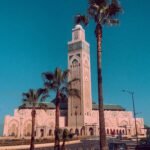
| Casablanca | Modern Morocco, Hassan II Mosque |
| Rabat | Capital, historic sites, coastline |
This is why you should avoid trying to see the entire country in just a few days.
If you have 7–10 days, choose a logical route rather than trying to visit every major city.
2. Distances Can Be Longer Than They Look
One of the biggest surprises for first-time visitors is how long some journeys can take.
Two destinations may look relatively close on a map, but mountain roads, traffic, stops, and changing terrain can make the journey much longer than expected.
| Route | Travel Consideration |
|---|---|
| Marrakech → Essaouira | Easy day trip |
| Marrakech → Ait Ben Haddou | Mountain crossing |
| Ait Ben Haddou → Dades | Scenic but winding |
| Dades → Merzouga | Long journey |
| Merzouga → Fes | Long-distance travel |
| Fes → Chefchaouen | Moderate journey |
| Marrakech → Merzouga | Very long journey |
What This Means for Your Itinerary
Don’t plan sightseeing immediately after every long transfer.
A better itinerary might look like:
Travel day → Explore → Overnight → Continue
rather than:
Travel all day → Arrive late → Sightsee → Wake up early → Repeat
This is particularly important if you’re traveling with children or prefer a relaxed vacation.
3. You Don’t Need to See Everything
This is perhaps the most important lesson.
Morocco has enough destinations and attractions to fill several weeks, but trying to visit them all can turn your vacation into a transportation marathon.
| Trip Length | Better Strategy |
|---|---|
| 3 days | Marrakech |
| 5 days | Marrakech + one region |
| 7 days | Marrakech + Sahara |
| 10 days | Marrakech + Sahara + Fes/Chefchaouen |
| 14 days | Cities + Sahara + coast |
| 21+ days | Slow, comprehensive journey |
For most first-time visitors, 7–10 days provides an excellent introduction to Morocco.
4. Bargaining Is Part of the Experience
Shopping in Moroccan souks can be one of the most enjoyable parts of your trip, but bargaining is common.
You will encounter this particularly when shopping for:
- Rugs
- Leather goods
- Lanterns
- Ceramics
- Clothing
- Jewelry
- Souvenirs
- Artisan products
How Bargaining Usually Works
| Step | What to Do |
|---|---|
| 1 | Ask the price |
| 2 | Decide what you’re genuinely willing to pay |
| 3 | Make a reasonable counteroffer |
| 4 | Negotiate politely |
| 5 | Walk away if you’re not interested |
| 6 | Buy only if you’re comfortable with the final price |
Don’t treat bargaining as an argument.
A friendly attitude makes the experience much more enjoyable.
And if you don’t want to negotiate, many shops and businesses offer fixed prices.
5. Carry Some Cash
Morocco has modern banks, ATMs, card payments, and digital services, but cash remains important for everyday travel.
You’ll particularly want cash for:
| Situation | Cash Useful? |
|---|---|
| Small restaurants | ✓ |
| Markets | ✓ |
| Taxis | ✓ |
| Tips | ✓ |
| Small shops | ✓ |
| Rural areas | ✓ |
| Hotels | Sometimes |
| Large restaurants | Often card accepted |
| Major stores | Often card accepted |
Morocco’s currency is the Moroccan dirham (MAD).
Don’t carry all your money at once. Keep a small amount accessible and store the remainder securely.
6. Dress Comfortably and Respectfully
Morocco is accustomed to international visitors, and tourists wear a wide variety of clothing.
However, dressing somewhat conservatively is generally the easiest approach, particularly when visiting traditional neighborhoods, rural communities, and religious or cultural sites.
| Clothing | Practicality |
|---|---|
| Lightweight trousers | Excellent |
| Loose shirts | Excellent |
| T-shirts | Fine |
| Long skirts/dresses | Good option |
| Shorts | Generally acceptable, especially tourist areas |
| Very revealing clothing | Better avoided in traditional settings |
| Scarf/shawl | Useful |
| Comfortable shoes | Essential |
You do not need to completely change your wardrobe for Morocco.
Think comfortable, breathable, practical, and respectful.
7. The Sahara Is Not Just About the Camel Ride
Many travelers book a Morocco trip specifically because they want to visit the Sahara.
The camel ride is memorable, but the complete desert experience is much more than that.


A typical desert experience can include:
| Experience | Why It Matters |
|---|---|
| Drive through southern Morocco | Scenic journey |
| Ait Ben Haddou | Historic architecture |
| Dades Valley | Dramatic landscapes |
| Todra Gorge | Canyon scenery |
| Merzouga dunes | Sahara landscape |
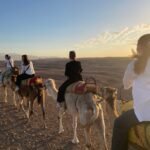
| Camel trek | Traditional desert experience |
| Sunset | One of the highlights |
| Desert camp | Overnight experience |
| Dinner | Local atmosphere |
| Music around the campfire | Cultural experience |
| Sunrise | Another major highlight |
One Important Tip
Don’t squeeze the Sahara into an unnecessarily short itinerary.
If you’re traveling from Marrakech to Merzouga, the journey is long. A multi-day tour is generally more enjoyable than trying to rush there and back.
8. Moroccan Food Deserves More Attention
One thing many visitors wish they had done more of is simply eating.
Moroccan cuisine is one of the country’s major cultural experiences.
| Food | What to Expect |
|---|---|
| Tagine | Slow-cooked savory dish |
| Couscous | Traditional staple |
| Harira | Soup, often enjoyed during Ramadan |
| Pastilla | Sweet-savory pastry |
| Brochettes | Grilled meat |
| Moroccan salads | Fresh vegetable dishes |
| Mint tea | Classic Moroccan drink |
| Fresh juice | Popular in many cities |
| Msemen | Moroccan flatbread/pancake |
Don’t limit yourself to restaurants aimed specifically at tourists.
Trying reputable local restaurants, traditional riads, food markets, and cooking experiences can give you a much better understanding of Moroccan cuisine.
9. A Riad Is More Than Just a Place to Sleep
If this is your first trip to Morocco, staying in a riad can completely change the accommodation experience.
Traditional riads are typically built around an interior courtyard and can offer a much more intimate atmosphere than a conventional hotel.
| Riad Feature | Why Travelers Like It |
|---|---|
| Traditional architecture | Cultural experience |
| Courtyard | Quiet atmosphere |
| Rooftop terrace | City views |
| Moroccan breakfast | Local experience |
| Smaller scale | More personal |
| Medina location | Easy access to historic areas |
However, location matters.
A beautiful riad deep inside a Medina may be less convenient if you have heavy luggage.
Before booking, check:
- Walking distance from vehicle access
- Reviews
- Air conditioning/heating
- Breakfast
- Wi-Fi
- Room size
- Rooftop access
- Transfer arrangements
10. Morocco Is Best Experienced With Some Flexibility
Perhaps the biggest lesson is don’t plan every minute.
Morocco is a country where unexpected experiences often become the highlights of a trip.
You might discover:
- A small restaurant
- A beautiful rooftop
- A local market
- A village café
- A scenic viewpoint
- A friendly artisan
- A spontaneous tea invitation
- A fascinating conversation
Leave some room in your itinerary.
A Good Balance
| Plan Ahead | Leave Flexible |
|---|---|
| International flights | Restaurant choices |
| Hotels/riads | Shopping |
| Desert tour | Free afternoons |
| Major transportation | Cafés |
| Important attractions | Exploring Medinas |
| Airport transfers | Spontaneous experiences |
The goal isn’t to eliminate planning.
It’s to plan the important things while leaving enough space to enjoy Morocco naturally.
Bonus: Learn a Few Moroccan Arabic Expressions
You don’t need to speak Arabic to travel around Morocco.
French is also widely useful in many tourist and business situations, while English is common in tourist areas.
Still, learning a few words can make interactions more enjoyable.
| Expression | Meaning |
|---|---|
| Salam / Salam Alaikum | Hello |
| Shukran | Thank you |
| Afak | Please |
| Naam | Yes |
| La | No |
| Sabah al-khair | Good morning |
| Bslama | Goodbye |
| Labas? | How are you? |
| Inshallah | God willing |
Even a few simple expressions can help create a warmer interaction with locals.
What I Wish I Knew About Moroccan Taxis
Taxis are useful and relatively affordable, but the system can be confusing for first-time visitors.
Morocco commonly has:
- Petit taxis for city travel
- Grand taxis for longer journeys
| Taxi | Typical Use |
|---|---|
| Petit taxi | Within a city |
| Grand taxi | Longer routes |
| Private transfer | Airport/tour/comfortable travel |
If you’re unfamiliar with the local taxi system, ask your accommodation for guidance.
For airport transfers or multi-city journeys, a pre-arranged transfer can be considerably easier.
What I Wish I Knew About Medina Navigation
Moroccan Medinas can be confusing at first.
Narrow streets, markets, turns, and pedestrian-only areas make navigation different from walking around a modern city.
Medina Tips
| Tip | Why It Helps |
|---|---|
| Download offline maps | Useful without data |
| Save your accommodation location | Easier to return |
| Remember nearby landmarks | Medinas can look similar |
| Wear comfortable shoes | Lots of walking |
| Carry a small bag | Easier in crowded streets |
| Don’t rush | Enjoy the atmosphere |
Getting a little lost isn’t necessarily a bad thing.
Some of the best discoveries happen when you stop following the main tourist route.
What I Wish I Knew About Guides and Tours
A knowledgeable local guide can add considerable value, particularly in large historic Medinas.
A good guide can explain:
- History
- Architecture
- Local traditions
- Craftsmanship
- Food
- Religious heritage
- Daily life
However, always check what is included in your tour.
| Before Booking | Check |
|---|---|
| Guide | Is one included? |
| Transportation | Private or shared? |
| Meals | Included or excluded? |
| Entrance fees | Included? |
| Accommodation | Which category? |
| Desert camp | Standard or luxury? |
| Group size | How many travelers? |
| Pickup | Hotel/riad included? |
Don’t choose a tour solely because it has the lowest price.
What I Wish I Knew About Morocco’s Weather
Morocco doesn’t have one single climate.
Conditions can differ dramatically depending on where you are.
| Region | General Climate Consideration |
|---|---|
| Marrakech | Hot summers, cooler evenings |
| Sahara | Hot days, cooler nights |
| Atlas Mountains | Cooler, especially at altitude |
| Atlantic coast | Milder, sometimes windy |
| Northern Morocco | Mediterranean influence |
| Inland areas | Greater temperature variation |
This is why layers are one of the most useful things you can pack.
What I Wish I Knew About Internet and SIM Cards
Most visitors can stay connected without major difficulty.
You can generally choose between:
- Roaming with your existing provider
- Local SIM
- eSIM, if your phone supports it
- Hotel Wi-Fi
For long road trips, download important information before leaving Wi-Fi.
Keep offline copies of:
- Hotel addresses
- Booking confirmations
- Tour details
- Maps
- Emergency contacts
- Flight information
This is especially useful when traveling into remote mountain or desert areas.
What I Wish I Knew About Drinking Water
For travelers who are uncertain about local water, bottled or appropriately treated water is the simplest option.
During long excursions, especially in hot weather, always carry enough water.
This becomes particularly important for:
- Sahara tours
- Atlas Mountain hikes
- Long road trips
- Summer sightseeing
- Outdoor activities
A reusable bottle can be useful, especially if you’re staying somewhere with safe drinking-water facilities.
What I Wish I Knew About Travel Pace
Morocco rewards travelers who slow down.
Instead of:
Marrakech → Fes → Chefchaouen → Sahara → Essaouira → Casablanca in seven days
consider:
Marrakech → Sahara → Fes → Chefchaouen
and actually enjoy each destination.
Fast vs. Comfortable Travel
| Fast Travel | Comfortable Travel |
|---|---|
| Many destinations | Fewer destinations |
| Frequent hotel changes | Longer stays |
| Long driving days | Balanced travel |
| Less free time | More exploration |
| More stressful | More memorable |
If you have the choice, add days rather than destinations.
10 Things to Remember Before Your Morocco Trip
| # | Lesson |
|---|---|
| 1 | Morocco is much more diverse than Marrakech and the Sahara |
| 2 | Travel times can be longer than they appear |
| 3 | You don’t need to visit everything |
| 4 | Bargaining is common in many souks |
| 5 | Keep some Moroccan dirhams with you |
| 6 | Dress comfortably and respectfully |
| 7 | The Sahara experience is much more than a camel ride |
| 8 | Moroccan food is part of the journey |
| 9 | Staying in a riad can enhance your trip |
| 10 | Leave room for spontaneity |
Final Thoughts: What I Wish I Knew Before Visiting Morocco
Morocco is one of those destinations that becomes easier to appreciate once you stop trying to experience it exactly like every other country.
You don’t need to understand every custom before arriving. You don’t need the perfect itinerary. And you certainly don’t need to visit every famous destination.
What matters most is preparing for the basics:
Understand the distances. Pack appropriately. Carry some cash. Dress comfortably. Give yourself enough time. Research your tours. And leave room for unexpected experiences.
If you’re visiting for the first time, 7–10 days is a great starting point. This gives you enough time to experience Marrakech, the Atlas Mountains, southern Morocco, the Sahara, and at least one additional historic destination without making the entire vacation feel rushed.
Most importantly, remember that Morocco isn’t just about ticking attractions off a list.
It’s about walking through a Medina, sitting down for mint tea, watching the sunset over the desert, sharing a meal, discovering a hidden courtyard, driving through the mountains, and experiencing a culture that feels different from home.
Come prepared, but leave room to be surprised.
Frequently Asked Questions
What should I know before visiting Morocco for the first time?
The most important things are to understand local customs, plan realistic travel times, carry some cash, pack for changing temperatures, and avoid trying to see too many destinations in a short trip.
How many days should I spend in Morocco?
Seven to ten days is an excellent length for a first visit. Two weeks is better if you want to explore several regions at a slower pace.
Is Morocco difficult for first-time travelers?
No. Morocco is a well-established tourist destination, and major tourist areas have extensive accommodation, transportation, restaurants, guides, and tour services. First-time visitors should simply prepare for differences in language, traffic, Medinas, transportation, and local customs.
Do I need to bargain in Morocco?
Bargaining is common in many traditional markets, but you don’t have to negotiate aggressively. Keep it friendly and only purchase something if you’re comfortable with the final price.
Should I carry cash in Morocco?
Yes. Keep some Moroccan dirhams available for taxis, markets, tips, small restaurants, and smaller businesses.
What should I wear in Morocco?
Lightweight, comfortable clothing works well. In traditional or rural areas, more modest clothing is generally the easiest choice.
Is the Sahara worth visiting?
For many travelers, absolutely. The Sahara offers much more than camel trekking, including desert scenery, sunsets, overnight camps, traditional meals, and memorable landscapes.
Should I stay in a riad?
Yes, particularly if you want to experience traditional Moroccan architecture and atmosphere. Check the location carefully before booking.
Should I visit Morocco independently or with a tour?
Both options can work. Independent travel offers flexibility, while organized tours can simplify transportation, accommodation, desert travel, and logistics.
What is the biggest mistake first-time visitors make?
Trying to do too much. Morocco is larger and more geographically diverse than many first-time visitors expect, so an itinerary with fewer destinations and more time in each place is usually more enjoyable.
:::